
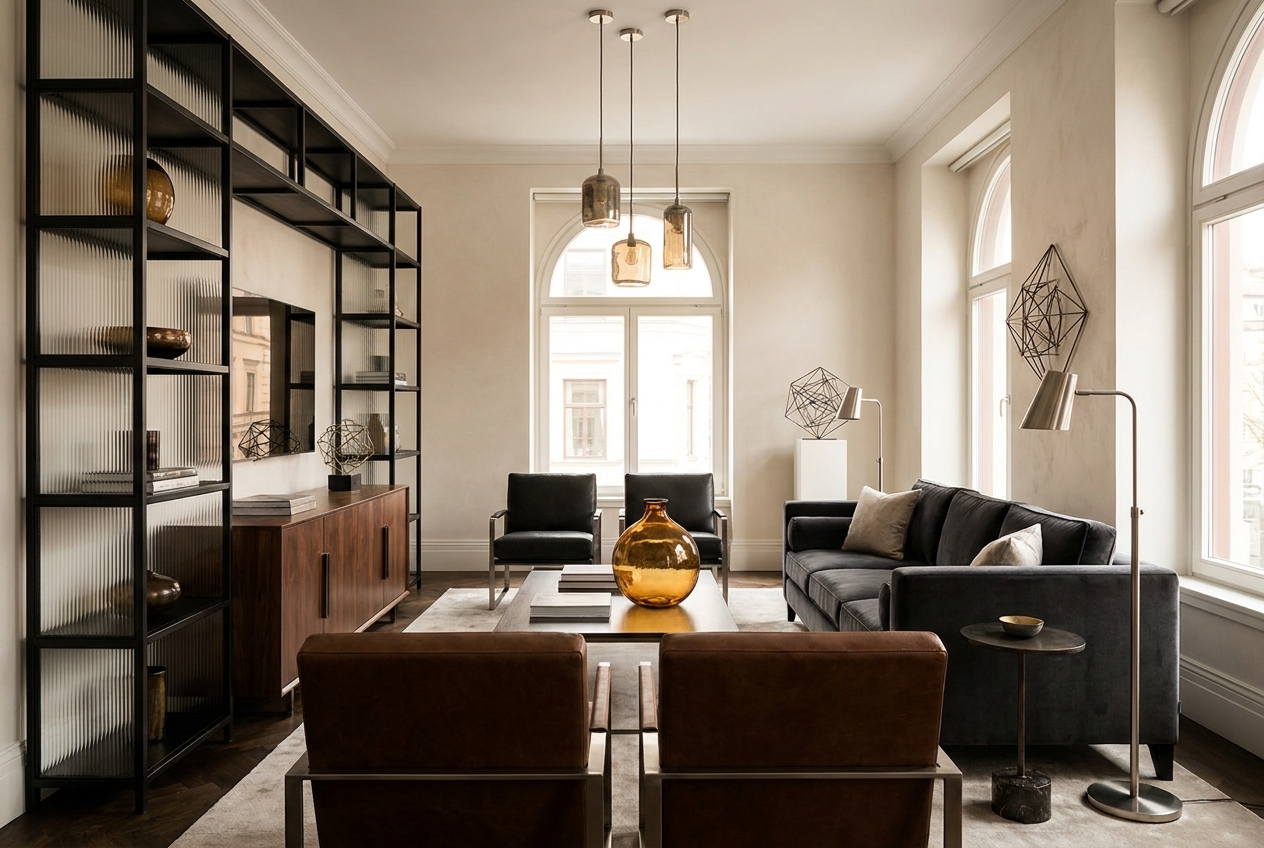
The most memorable rooms are rarely built from one material or one era. They are composed through contrast: a cool edge against a warm surface, a precise line softened by texture. In a contemporary interior, the meeting of Art Deco geometry and Industrial-Luxe materiality offers a particularly rich vocabulary. Blackened steel, fluted glass, walnut and brushed nickel can feel expressive without becoming theatrical, provided each has a clear role.
Art Deco contributes structure. Its arches, stepped profiles and confident symmetry give a room a sense of occasion. Rather than repeating a motif everywhere, choose one architectural punctuation: a fan-shaped detail, a disciplined grid or a piece with a strong vertical outline. That single note can make a space feel composed, not decorated. The goal is not a period recreation, but the clarity and confidence that made the style enduring.
Industrial-Luxe supplies the counterpoint. Blackened steel brings definition; brushed nickel catches light with a quieter hand than mirror-polished chrome. Fluted glass introduces privacy and translucence, revealing just enough of what lies beyond. Walnut keeps the palette human. Its natural variation prevents metal and glass from turning the room into a study in hard surfaces, while its deep tone lends the whole composition a reassuring anchor.
Scale is essential. A tall steel bookcase can balance a low, expansive sofa, while a substantial walnut console gives a wall visual gravity. Smaller metal objects work best when repeated sparingly, allowing the eye to travel rather than collect distractions. Think in layers: one structural gesture, one tactile surface, one reflective accent. A room gains sophistication when those elements share a relationship in finish or proportion, not when every piece matches.
Light reveals the materials’ real character. Daylight moving across fluted glass creates subtle bands of shadow; a shaded lamp can bring out the depth of walnut; a brushed surface glows rather than flashes. Use ambient and task lighting together, especially in rooms with darker finishes. A rich palette need not mean a dim room. Ivory walls, open sightlines and warm, well-directed light let charcoal and steel feel architectural instead of heavy.
The conversation with Mid-Century Modern design is equally natural. MCM contributes an emphasis on livability and a lighter sense of line, keeping Art Deco geometry from becoming too formal. A curved chair, a clean-lined table or a quietly sculptural lamp can soften the architecture while preserving its intent. Browse complementary silhouettes in The Gallery, then bring the materials and proportions together with The Design Studio.
When the balance is right, the room feels neither industrial nor ornate. It feels resolved: a tailored, tactile setting where the precision of Art Deco meets the honest character of metal and wood. That is the promise of Industrial-Luxe at its best, not spectacle for its own sake, but atmosphere shaped by thoughtful material choices.